Japanese knives are ground thinner and sharper than most German knives, which is what makes them so good at precise cutting — and also why they need more careful handling. Handled well, a Japanese knife can serve you for years and keep performing better than a duller, thicker blade. Handled carelessly, thin, hard steel is more prone to chipping, and high-carbon steel will rust.
At a glance
- Never the dishwasher. Hand wash with mild soap and dry it immediately.
- Oil high-carbon steel after use; stainless resists rust but isn't rust-proof.
- No bone, frozen food, or hard squash, and no twisting or prying.
- Cut on wood or a soft board, never glass, stone, or metal.
- Store it sheathed or blocked, not loose in a drawer.
- A 1000 grit stone covers most routine sharpening.
General Knife Care
Good care habits protect the knife you paid for and keep it cutting the way it should. Here's what actually matters.
Cleaning
- Never put your knife in the dishwasher. The heat, detergent, and jostling against other items can damage the edge, the blade finish, and the handle.
- Wash by hand with mild soap and warm water, then dry it immediately with a towel. Don't set it aside to air dry — even a few minutes wet is enough for rust to start on carbon steel, and stainless isn't immune either.
- Never leave the knife soaking in a sink, even briefly. Standing water is one of the fastest ways to damage a blade.
- After cutting acidic foods like tomatoes or citrus, wipe the blade right away — high-carbon steel especially can discolor if acid sits on it.
Preventing Rust

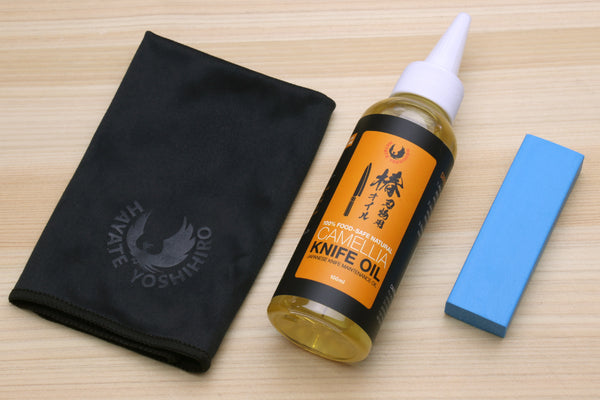
- Apply a few drops of knife oil or Tsubaki oil after each use, particularly on high-carbon steel. A thin oil layer helps protect the surface from moisture between uses.
- Stainless steel resists rust better than carbon steel, but it isn't rust-proof — it can still corrode if left wet for extended periods. Always dry your knife fully before storing it.
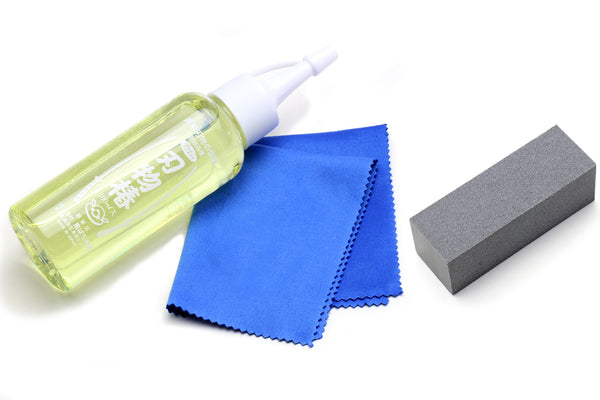
- If surface rust does appear, a rust eraser can remove it from the surface. It won't undo pitting or damage that's gone deeper into the steel — for that, the knife needs to go to someone who can regrind it.

Cutting Tips
- Use the right knife for the job. Don't cut through bone, frozen food, or hard squash with a single-bevel knife or a thin, high-hardness blade — that's one of the most common ways an edge chips.
- Cut on wood or a soft plastic/rubber board. Avoid hard surfaces like glass, granite, stone, or metal, which wear down the edge fast.
- Don't twist or pry the knife sideways while cutting. Japanese knives are thinner and harder than most Western knives, which makes them more brittle under lateral stress.
- Cut in a straight push-and-pull motion rather than rocking hard side to side, especially with single-bevel blades.
Storage
- Don't toss your knife loose into a drawer, where it can get nicked, dulled, or nick something else.
- Store it dry, in a sheathed or blocked setup that keeps the edge from contacting anything. A saya cover works well for this — browse our saya cover selection here.

Sharpening Your Knife
Which whetstone you need depends on the knife's condition and what you're trying to accomplish. The wrong stone wastes time and can damage the blade — and a single stone isn't enough. Sharpening effectively means moving through multiple grits, coarse to fine.
| Grit | Stage | What it's for |
|---|---|---|
| 400 | Coarse | Repair work, not routine sharpening — fixing small chips, reshaping an edge, or thinning a blade. |
| 1000 | Basic sharpening | The workhorse for routine sharpening; brings back an edge that's gone dull from use. |
| 3000 | Finer | Refines the edge after 1000 grit sharpening. |
| 6000 | Finer | Routine maintenance and polishing on kitchen knives. |
| 8000 | Super fine | Knives used for delicate slicing — vegetables, seafood, or fruit. |
| 10000 | Super fine | A highly polished edge that noticeably reduces resistance when slicing. |
The 400 grit removes metal quickly, so use it only when the knife actually needs that level of correction. The finer stones smooth out scratches from a coarser stone and prepare the blade for polishing, and the super fine stones put on a mirror-like polish that reduces drag and tearing.

If you'd like to learn more about whetstones, visit our guide: What Whetstones Should I Get? For a complete step-by-step tutorial, check out: How to Sharpen Your Knife.
Have questions? Get in touch with us — we're happy to help.
Knife oil and care
View all