

A knife's finish isn't just cosmetic — it comes from the forging and polishing process and can affect grip, food release, and how visible rust would be. Here's what each of the common Japanese finishes actually is, and the practical trade-offs of each.
Some of this traces back to traditional Japanese sword polishing, which uses natural stones and handwork to bring out the hamon line and steel layers without a glassy shine. Kitchen knife finishes are polished differently, but several — kasumi in particular — borrow that same idea of a matte, layered look rather than pure reflectivity.
| Finish | What it is | Upside | Watch for |
|---|---|---|---|
| Kurouchi | Dark oxide scale left from forging | Texture helps grip; changes with use | Holds moisture; dry thoroughly |
| Nashiji | Lightly textured "pear skin" matte | Some grip and food release | Holds moisture; dry thoroughly |
| Kasumi | Cloudy contrast of soft iron and hard steel | Hides small imperfections, reduces drag | Soft iron cladding is rust-prone |
| Hammered damascus | Small hand-worked dimples | Less food sticking, added grip | — |
| Suminagashi | Flowing, marbled folded layers | Every pattern is unique | More forging work, higher price |
| Mirror polish | Bright, buffed reflective surface | Less resistance on long draw cuts | Scratches easily; starchy food can stick |
Kurouchi Finish (Black Forge Scale)
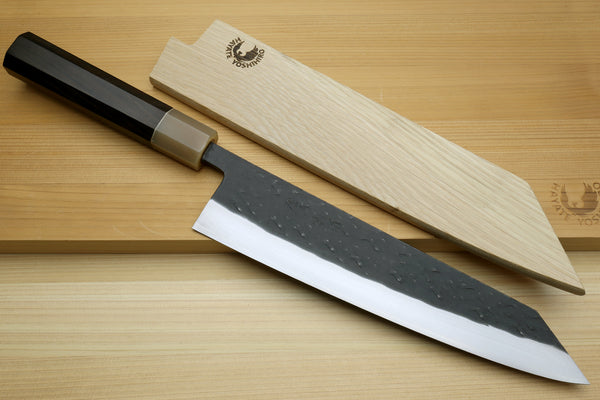
Kurouchi is one of the most rustic finishes — it's the dark oxide scale left on the blade from forging, sometimes darkened further with a dye. It's left mostly unpolished by design.
Advantages
Kurouchi wears and darkens with use, so the finish visibly changes over time rather than staying pristine. It also adds a bit of texture that can help with grip.
Disadvantages
It's not for someone who wants a knife that looks the same on day 500 as day one. The textured surface can hold moisture, so — like any high-carbon blade — it needs to be dried thoroughly after each use to avoid rust; that applies even to stainless-clad versions, which resist staining but aren't rust-proof.

Kurouchi knives
View all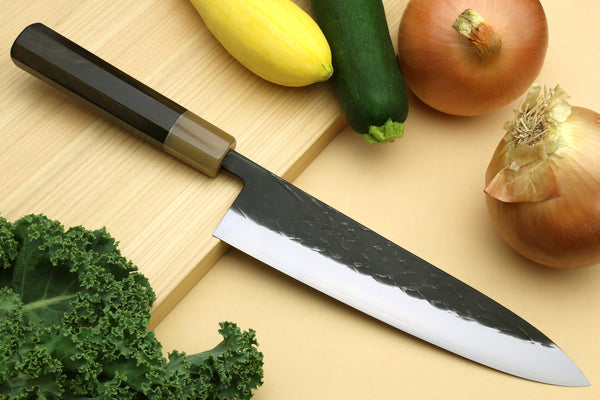
Nashiji Finish (Pear Skin Texture)
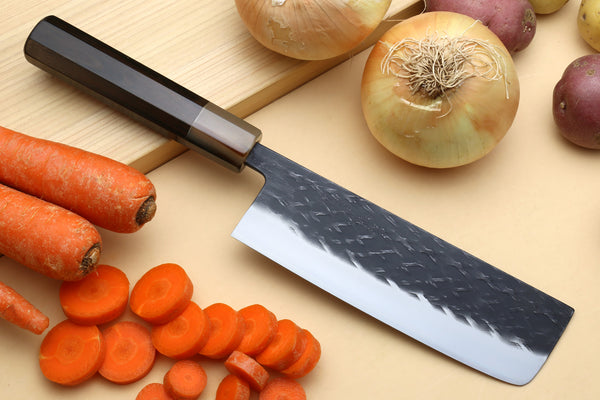
Nashiji, or "pear skin," is a lightly textured matte finish common on traditional Japanese knives. The texture can help reduce how much food sticks to the blade.
Advantages
Like a hammered finish, nashiji adds some grip and can help with food release, in a more understated way than hammered damascus.
Disadvantages
The texture can hold moisture, so drying the blade thoroughly after use matters — including on stainless steel, which resists staining but can still spot if left wet.

Kasumi Finish (Mist Cladding)
"Kasumi" means mist — it describes the cloudy contrast between soft iron cladding and a polished hard steel core. It's common on traditional single-bevel knives like yanagiba and deba, and made with fine water stones by hand.
Advantages
The matte surface hides small imperfections and reduces drag, which helps with food release while keeping a refined look.
Disadvantages
It's lower-maintenance than mirror polish but still needs attention — the soft iron cladding is more rust-prone than the hard steel core, so it needs to be dried after use. It also won't give you a high-gloss look if that's what you're after.

Hammered Damascus
Hammered damascus knives have small dimples worked into the surface, usually by hand. The dimples create small air pockets that can reduce food sticking during slicing, while adding grip and a handcrafted look. It's common on modern wa-gyuto and santoku knives.

Hammered Damascus knives
View all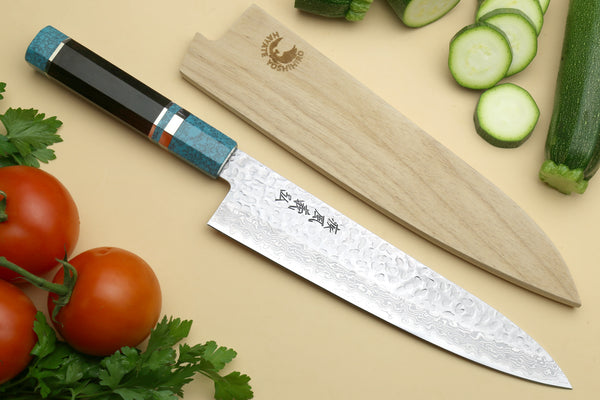 Yoshihiro VG-10 46 Layers Hammered Damascus Gyuto Japanese Chefs Knife Octagonal Turquoise Blue HandleFrom $209.99
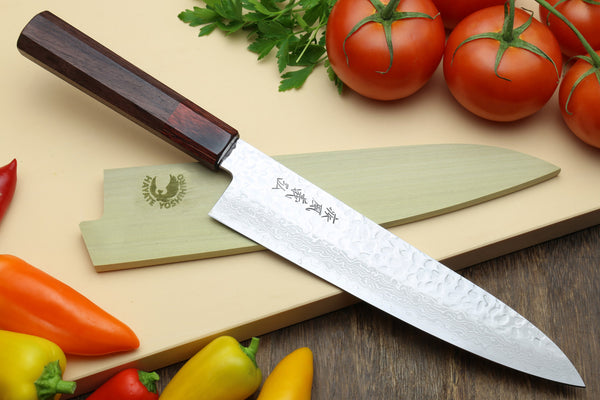 Yoshihiro VG-10 46 Layers Hammered Damascus Gyuto Japanese Chefs Knife (Octagonal Shitan Rosewood Handle)From $174.99
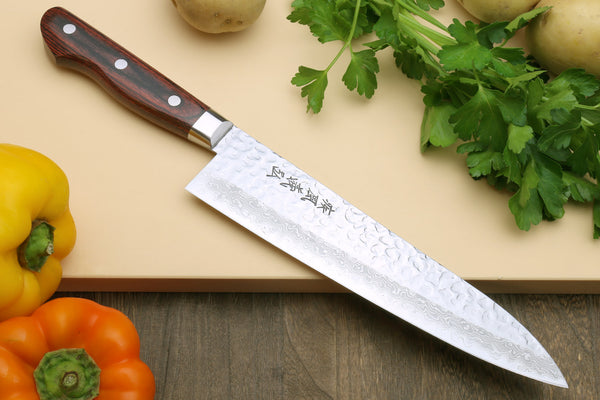 Yoshihiro VG-10 16 Layer Hammered Damascus Stainless Steel Gyuto Chefs KnifeFrom $144.99
Suminagashi Damascus
Suminagashi, "floating ink," is a more refined damascus style — flowing, marbled patterns from folded layers of steel, named for a traditional Japanese paper-dyeing technique using ink floated on water. Mirror or acid-etch treatments can push the contrast anywhere from subtle to dramatic.

Advantages
Each blade's pattern is unique, which makes damascus popular with collectors and gift buyers. Hammered damascus versions also carry the functional food-release benefit described above.
Disadvantages
The forging and polishing work involved — especially for suminagashi — takes more time than a plain finish, and that's reflected in price. Factory-made damascus exists at lower price points, but handcrafted pieces from experienced smiths cost more.
Mirror Polish Finish
Mirror finishes are common on Western-style knives — a bright, reflective surface produced with buffing wheels and polishing compounds. Some Japanese knives use it too, mainly for looks.
Advantages
Useful on precision slicers like sujihiki, yanagiba, and longer gyuto blades (240–270mm), since the smooth surface reduces resistance during long draw cuts.
Disadvantages
It scratches more easily than a textured finish and takes time and care to restore. On a double-beveled knife, the smooth surface can let starchy ingredients stick more than a textured finish like nashiji or kurouchi would. On a single-bevel knife like a yanagiba, only the flat back is mirror polished — the side that touches food is the ground bevel — so food-sticking is less of an issue there.

Choosing a Finish
Beyond looks, a finish can affect grip, food release, and how much attention the blade needs to stay rust-free — so it's worth picking based on how you'll actually use the knife, not just which one photographs best. Whatever finish you choose, the same basics apply: hand wash, dry immediately, don't leave it wet, and store it in a saya or blade guard.
Check our knife care guide for finish-specific maintenance tips.


